



Fatou-Anaïs SidibeFatou-Anaïs Sidibe

Centralising communication while enabling supervision of minor accounts

SaaS
B2C2C
iOS & Android App
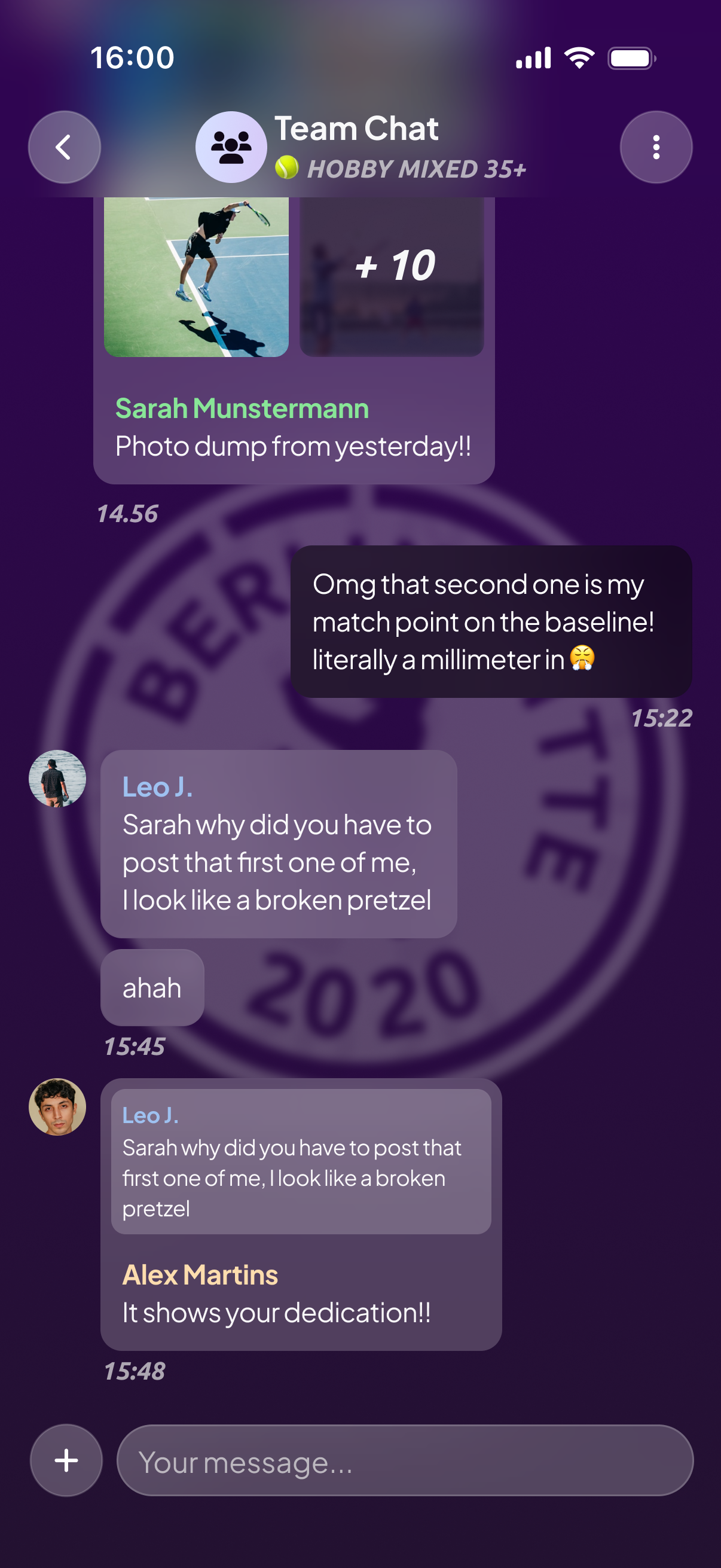
Messaging feature interface
Overview

Redesigned messaging in the company's mobile app to centralise club communication, support parents supervising their children's teams, and enable GDPR-compliant communication without sharing personal contact details.

Role:Solo Product designer
Duration:3 weeks from concept to handoff
Tools:Figma, UX Research, Information Architecture, Interactive Prototyping
Platform:Native Android & iOS, Web App (Mobile-first approach)

User Impact

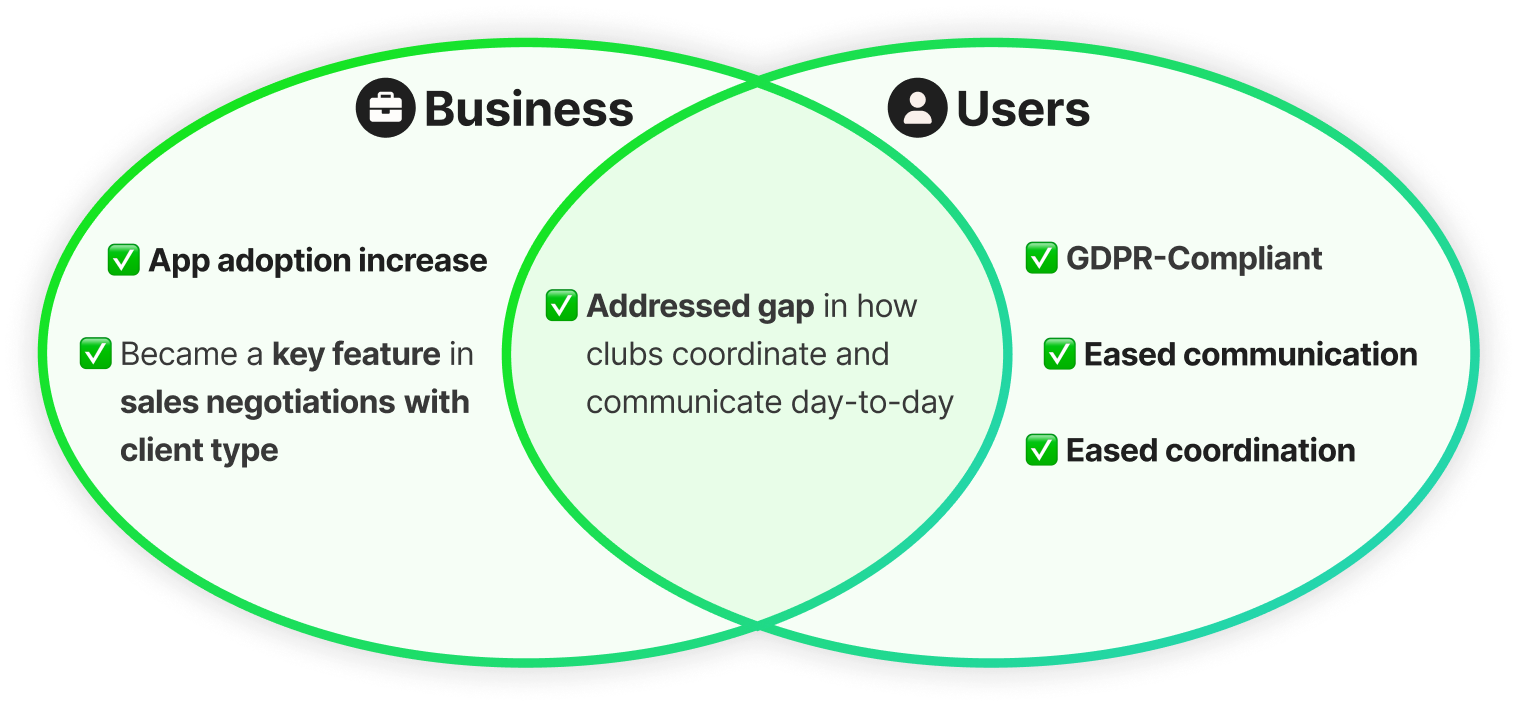
  • Personal data protection: no need to share personal contact with other members (GDPR compliant)
  • One place to manage all club communication
  • Clearer team communication

Business impact

  • Mobile app adoption increased after messaging launched
  • Became a key feature in sales conversations with larger clubs
  • Addressed gap in how clubs coordinate day-to-day

Key Decisions

  • Grouped messages by team to avoid confusion
  • Limited thread pinning to coaches to avoid noise
  • Updated the UI gradually to stay consistent with the rest of the app
Problem

The messaging feature wasn't built for communication across teams and roles

Messaging already existed in the app, but it wasn't structured around how clubs actually communicate day to day. Members belong to multiple teams, parents need access to their children's conversations, and coaches need control over what information stays visible. As conversations grew, important updates were easily lost, and clubs relied on external tools to fill the gaps.

The goal was to design a single messaging system with a clear structure that supports these roles and makes important conversations easy to find and manage.

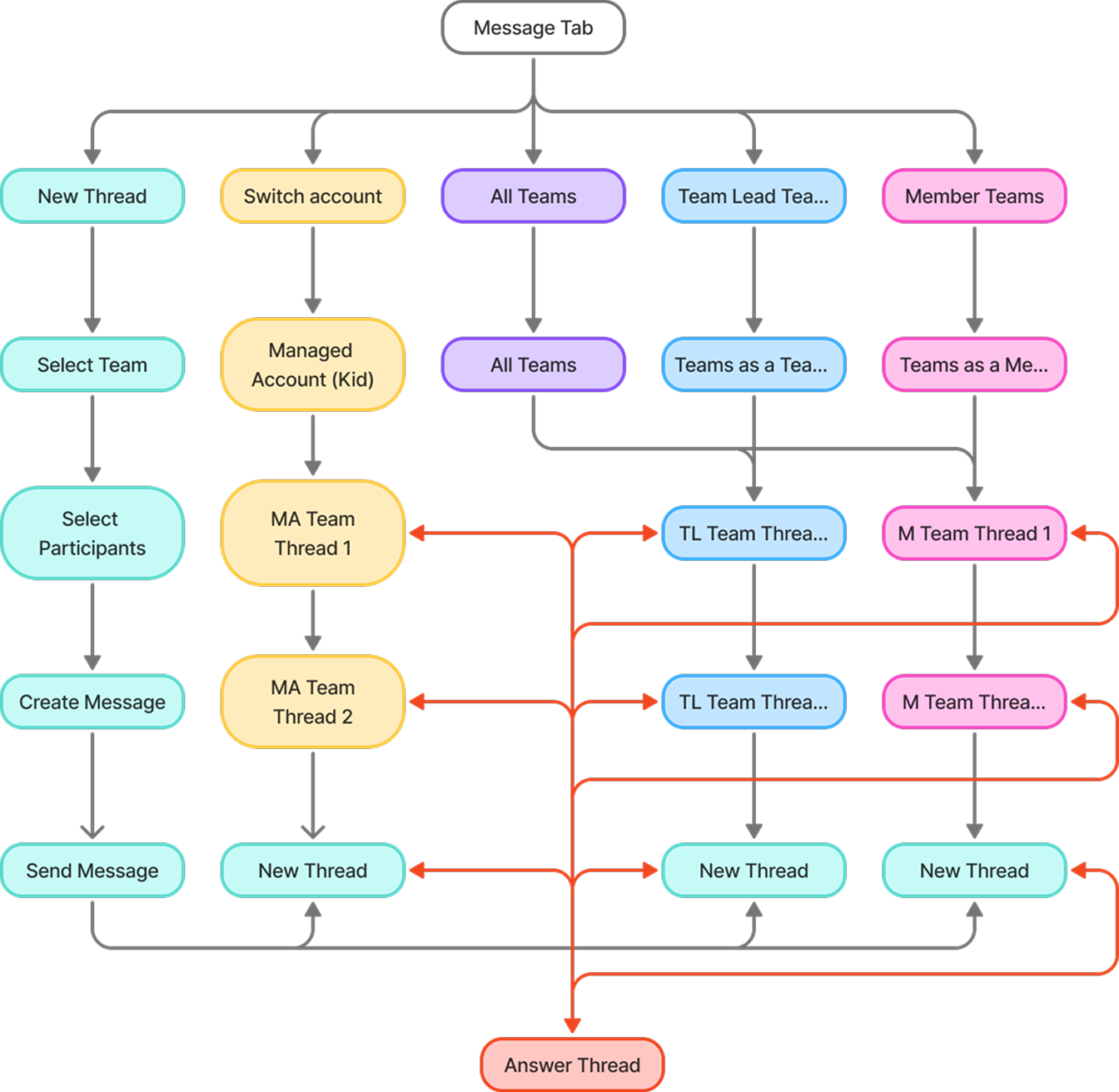
User flow diagram

User flow

Design approach

Designing for members, coaches, and parents

The messaging hub was designed to reflect how clubs communicate day to day, where people move between teams and roles.

The focus was on structure and clarity, so conversations remain easy to access and manage as usage grows.

I validated the design through prototypes shown to sales teams, leadership, and key client representatives before development, adjusting thread organization and access controls based on their feedback.

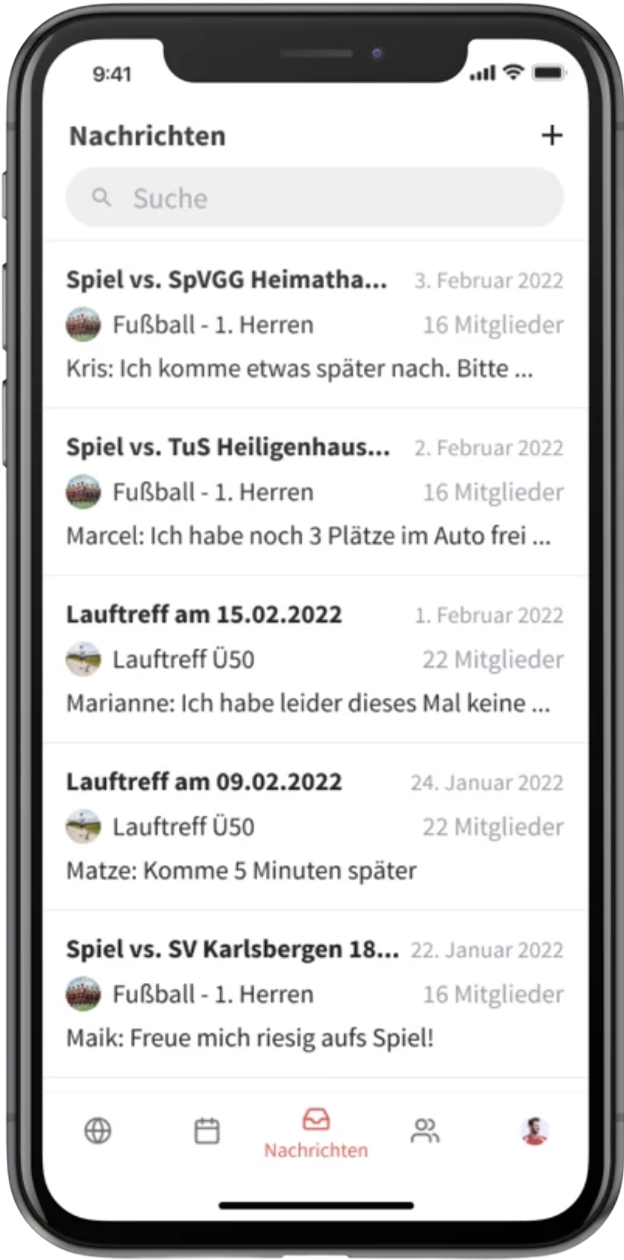
Threads organized by team

Threads organized by team

Make it easy to find a thread. For coaches the possibility to filter by role is added.

Minor accounts management

Parents switch between their account and their children's

Minor accounts management
Pinned threads

Pinned threads

Coaches pin key conversations to keep them visible

Protected personal data

Members can message teammates without sharing contact details

Protected personal data

Ensuring consistency across mobile and web

The messaging experience needed to work consistently across the native mobile app and the member space on web. Core behaviors such as conversation structure, pinned threads, and profile switching for minor accounts were aligned across platforms.

Mobile and web messaging interfaces side by side
Modernised UI

Building UI patterns that could scale

Messaging required new UI patterns.

I introduced vertical modals and member cards to support selection flows and future reuse across the app.

UI patterns and components
Outcome

Clubs moved their communication in-app

Messaging became a reliable way for clubs to communicate inside their own app. Team-based conversations and role-aware access made it easier to share updates and documents in a GDPR-compliant environment, without relying on external messaging tools.

The launch drove a significant increase in app adoption, with coaches and members responding positively across clubs.

Other works