






Automating subscription management in a complex system

Kurabu is a club management platform that supports the day-to-day administrative work of sports organisations, including members, communication, events, and subscriptions.
User impact
MVP setup to:
- Reduce invoicing errors by 70%
- Reduce clubs workload by ~15 hrs/week
Business impact
- Reduced sales and support requests
- Improved conversion
- Freed up developer time
Key Decisions
- Kept the MVP focused on age‑group rules
- Added mass actions for common tasks
- Prioritized product improvement to be done before MVP implementation
Manual subscriptions created busywork for clubs and developers
Subscriptions were managed manually or through spreadsheets, with member data spread across multiple databases.
Clubs' day-to-day subscription management and mistake corrections all landed on the development team. At season start alone, this reached up to 900 update requests across all clubs.
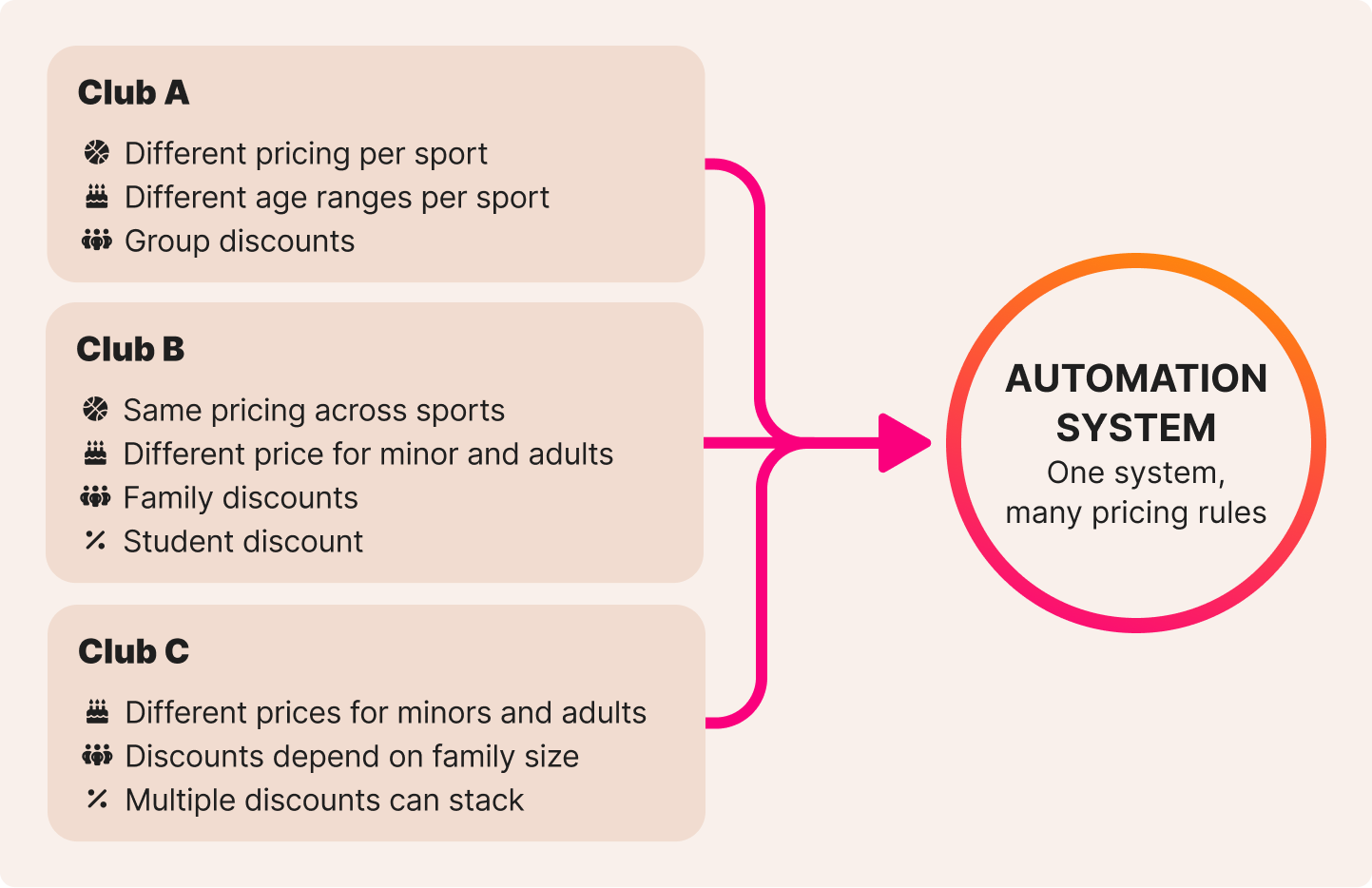
Automations had to be customisable
The challenge was to design a system flexible enough to support diverse club needs, while remaining realistic for a small engineering team to build and maintain.
Club A
Club B
Club C
Scoping the MVP around common patterns
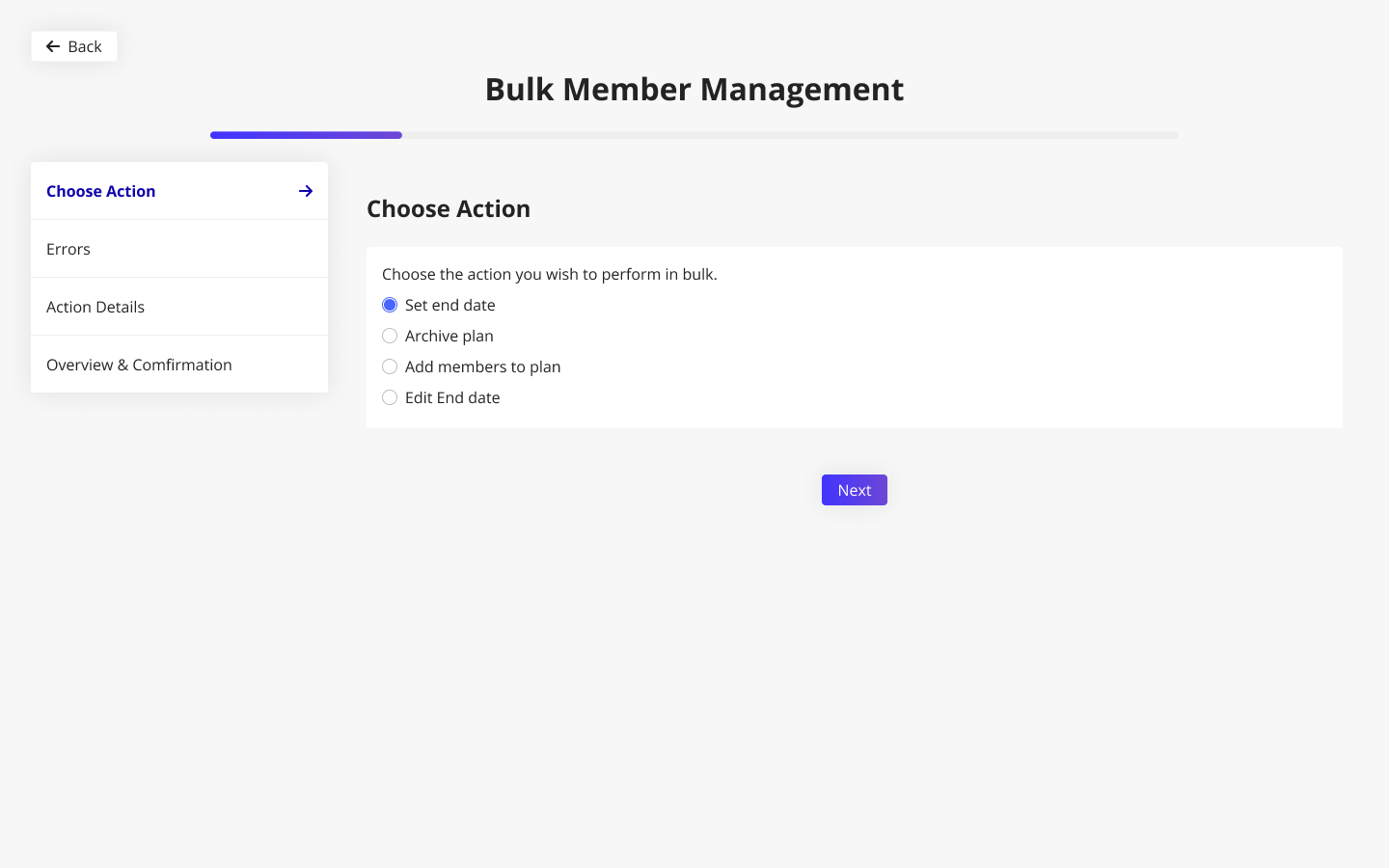
My goal wasn't to automate everything, but to remove the most repetitive work first. I scoped the MVP around common pricing patterns that could be translated into optional rules. Age-based changes were the most consistent pattern, while mass actions covered frequent time-based updates, such as applying subscription start/end dates to groups of members.
Clubs using an
age-based
pricing system
No exceptions
Predefined age groups are applied across all of the club's categories.
With exceptions
Categories don't always follow the same age group breakdowns.
Choosing automations over AI
Pricing variations across clubs follow recognisable patterns that can be modelled as configurable rules.
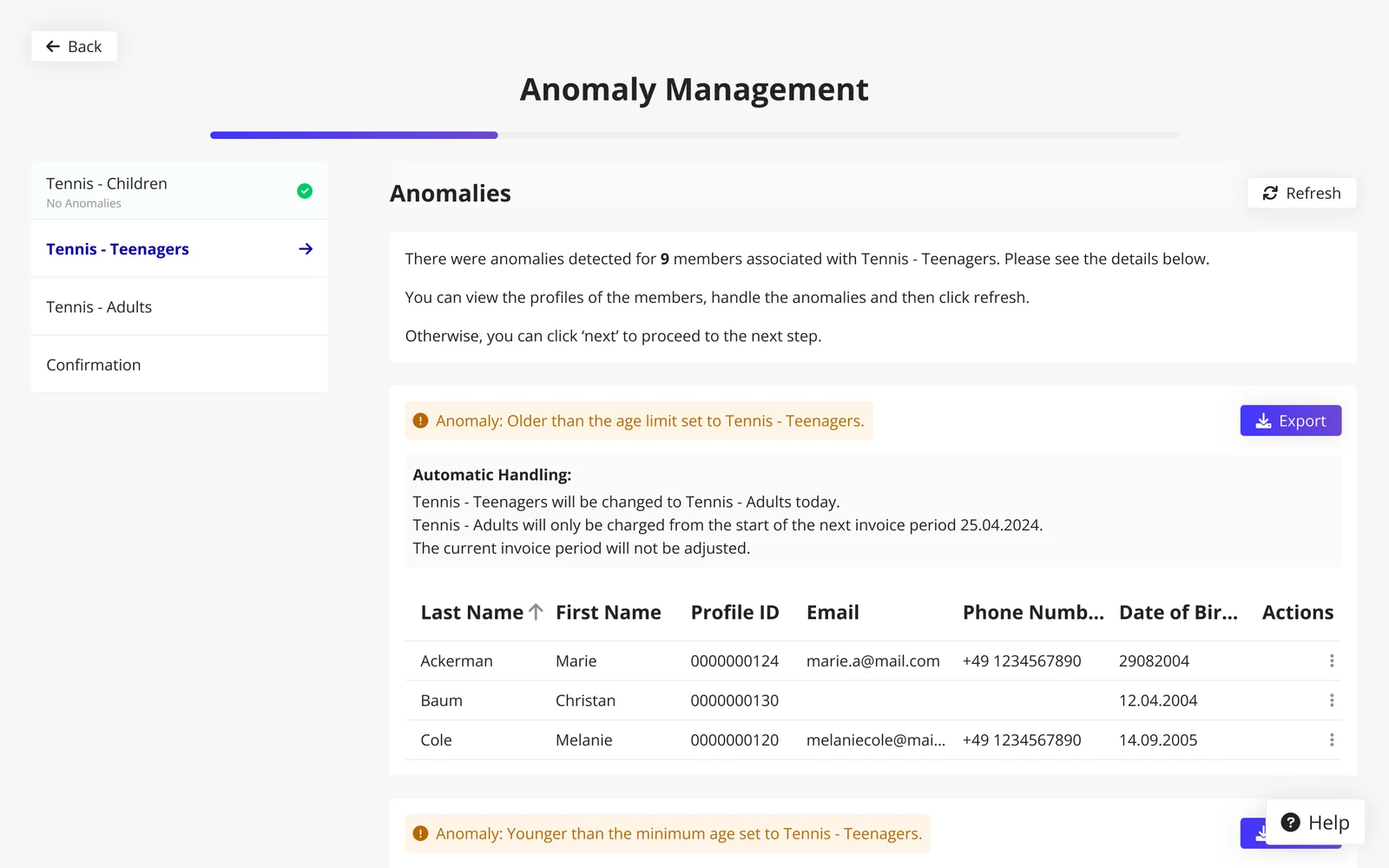
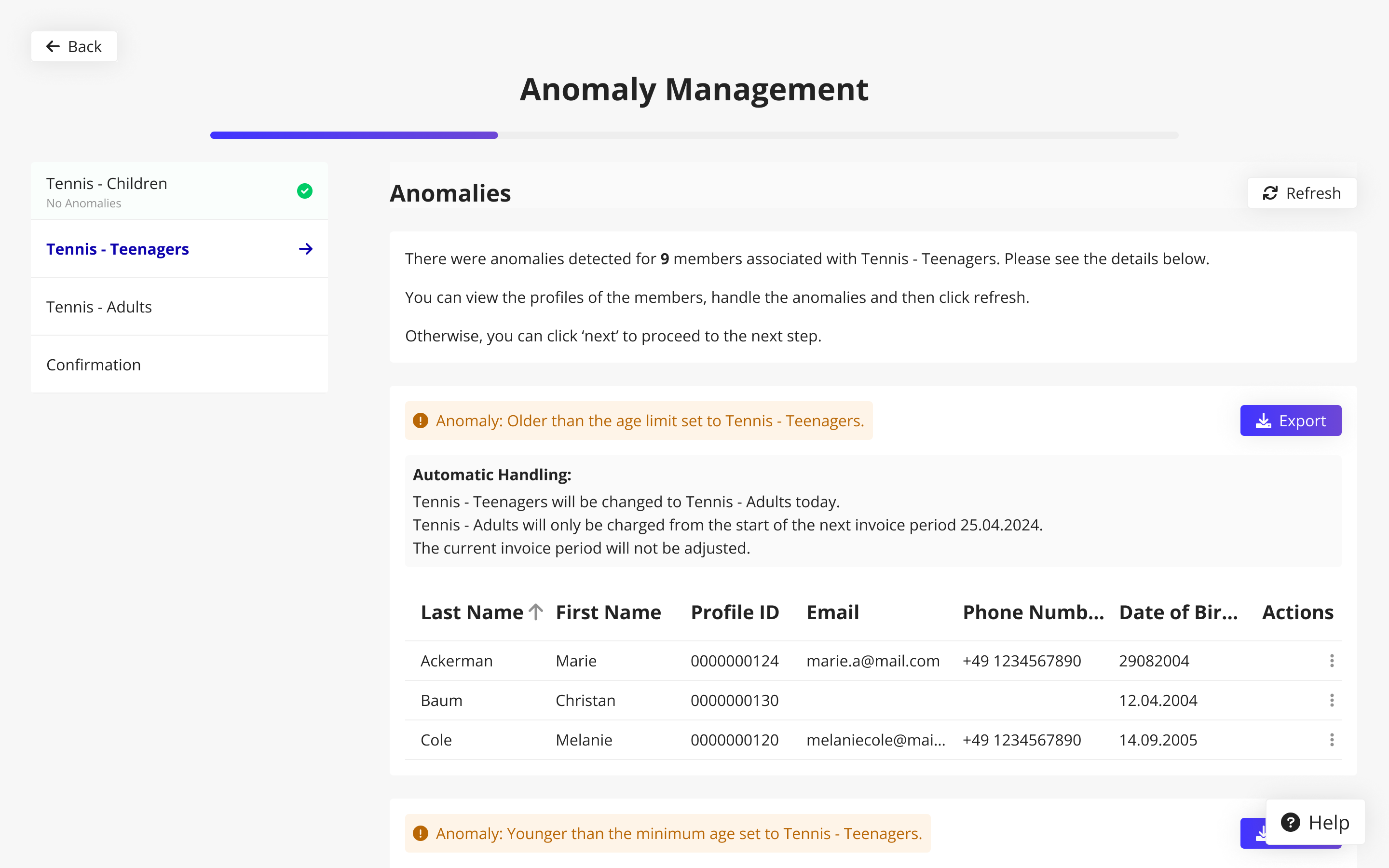
AI would add unpredictability to a system where every outcome needs to be trustworthy and auditable. A rule-based system with anomaly detection was the right fit, and far easier for a small, mainly junior development team to build and maintain.
Preparing the product for automations
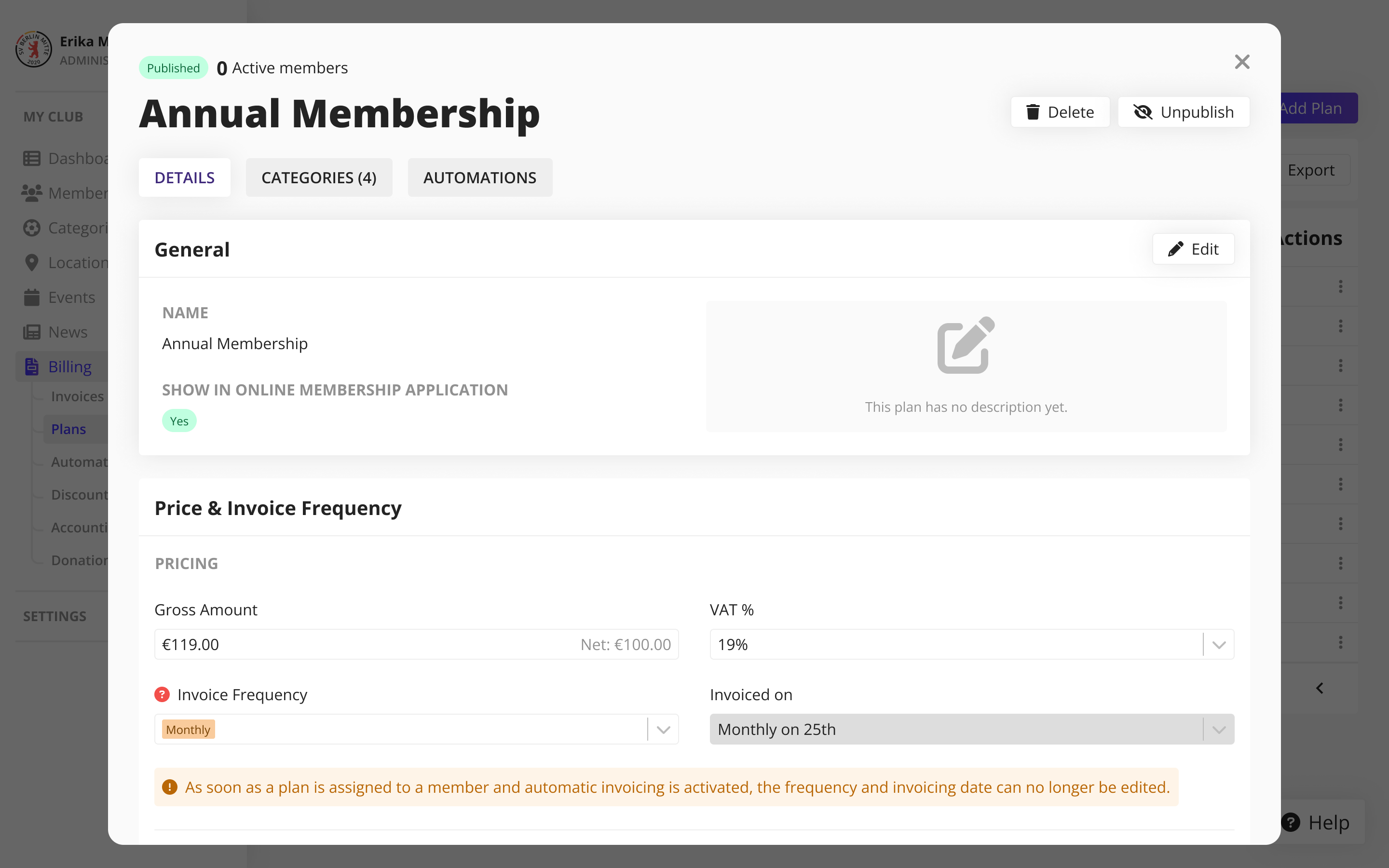
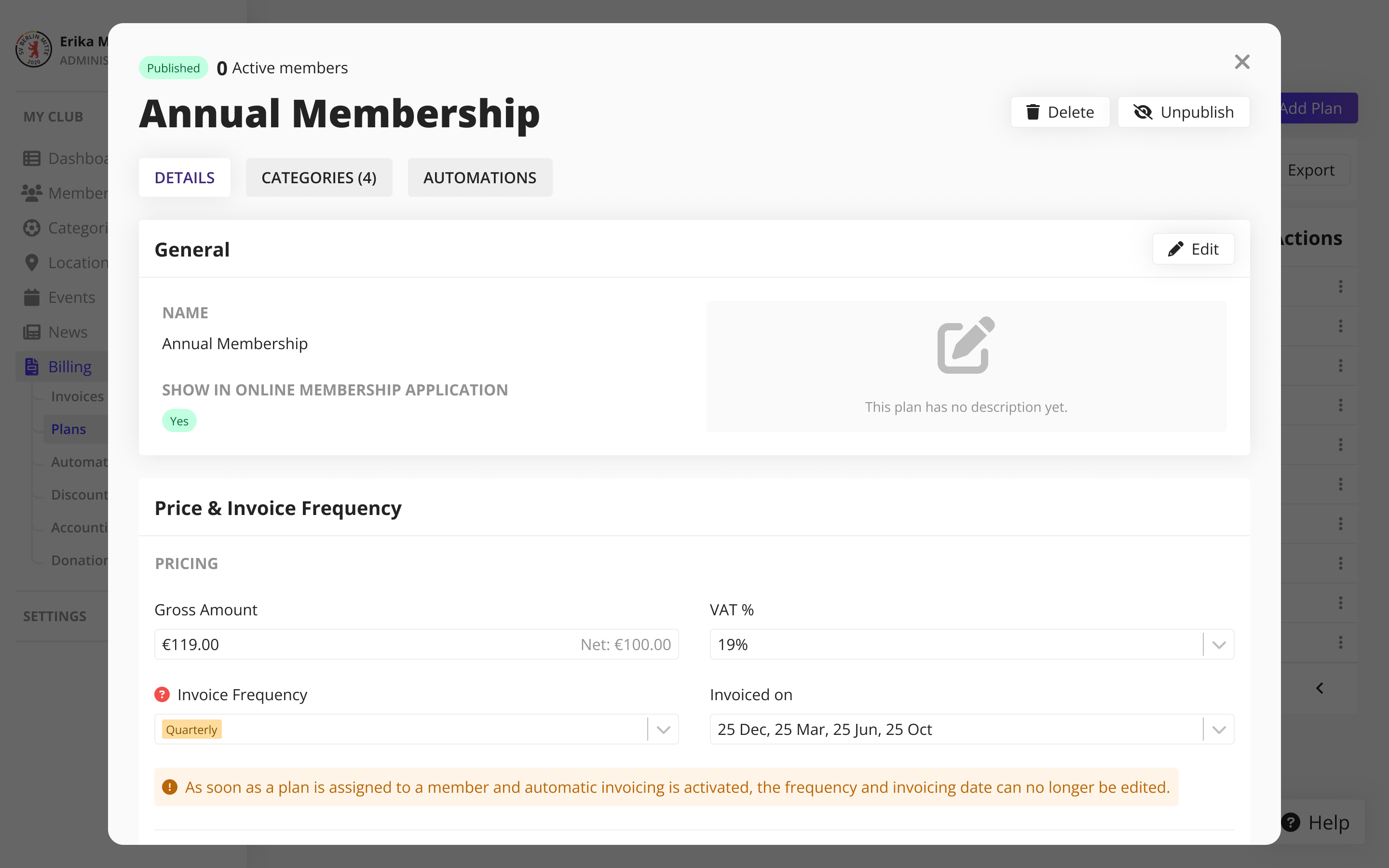
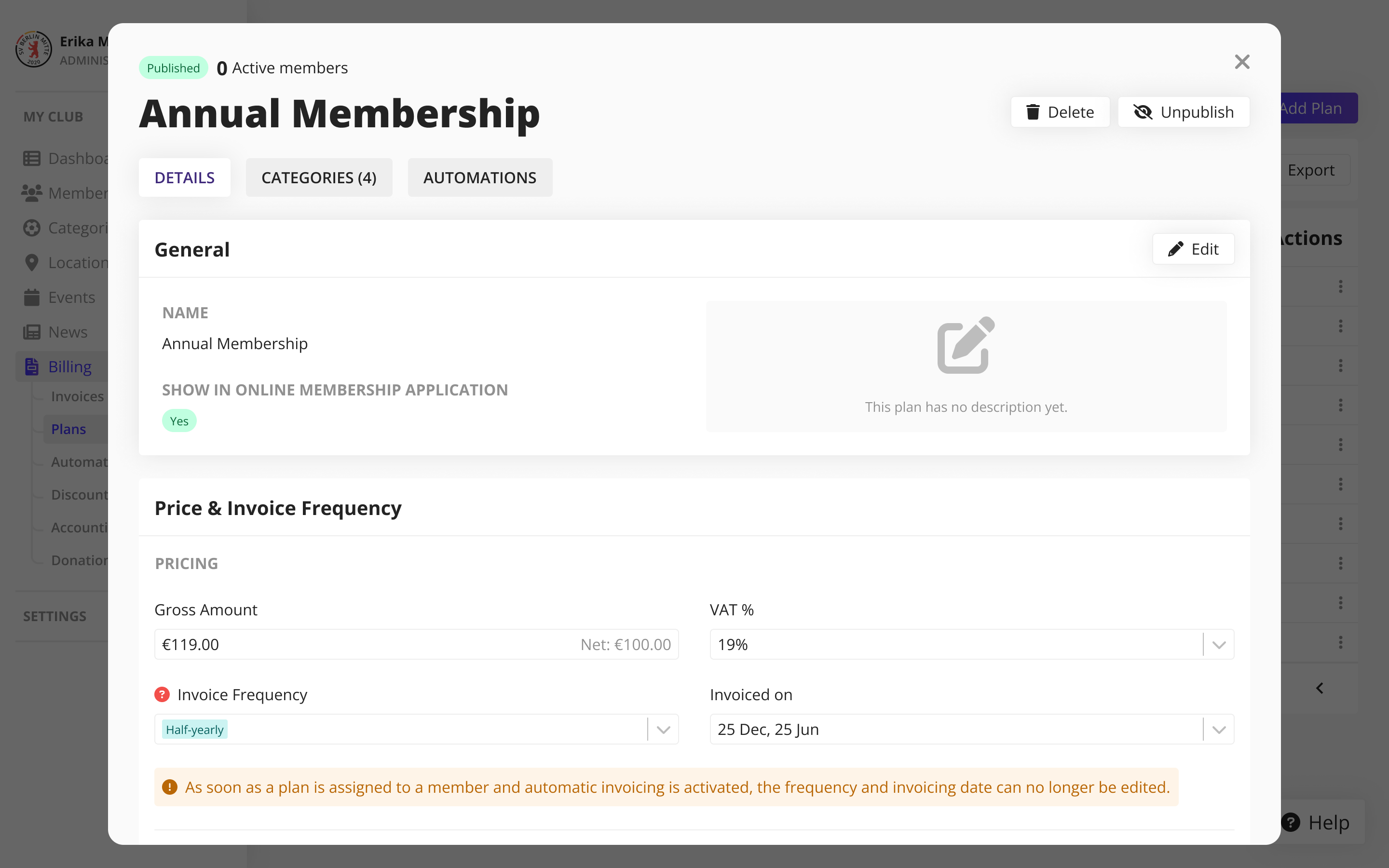
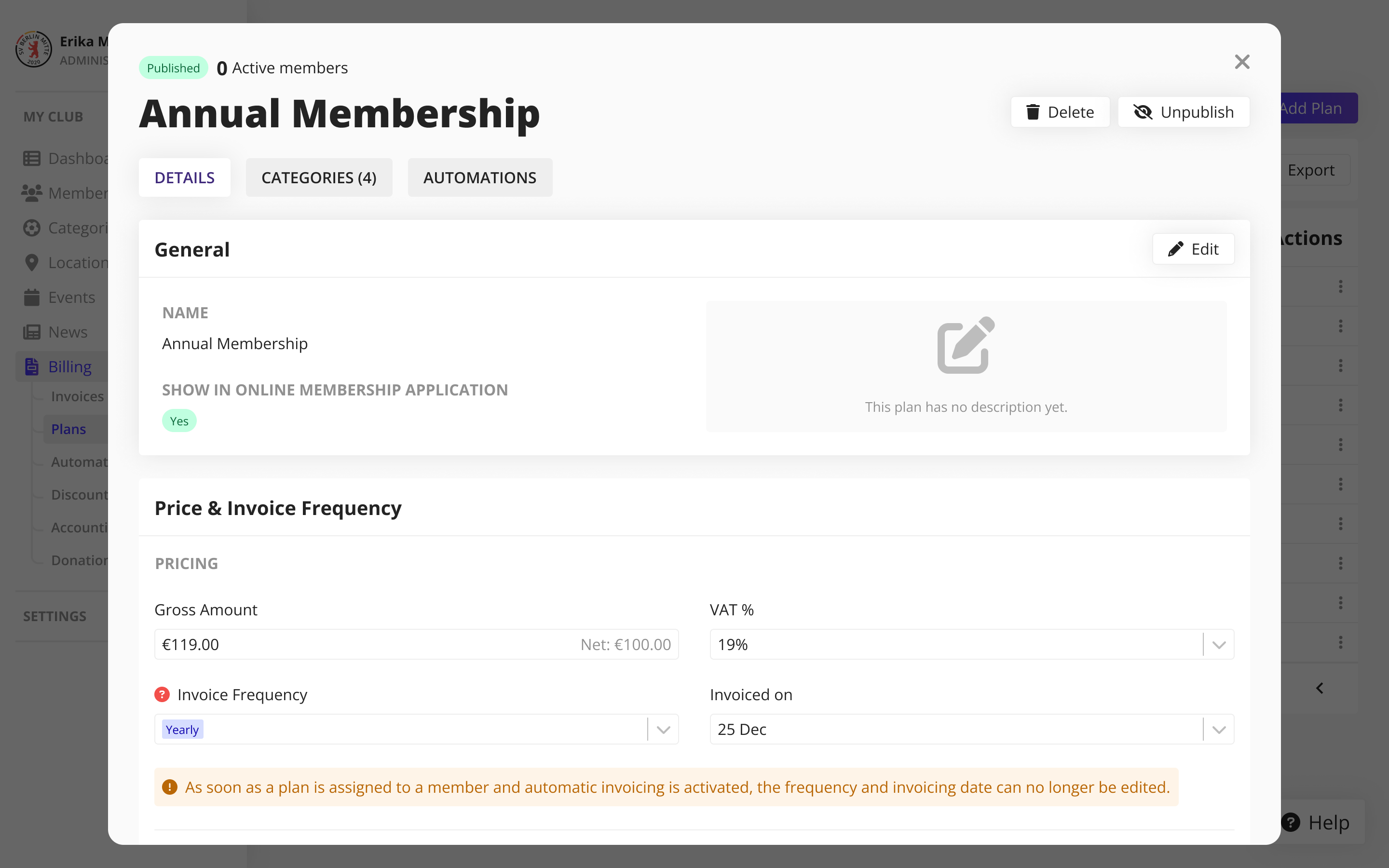
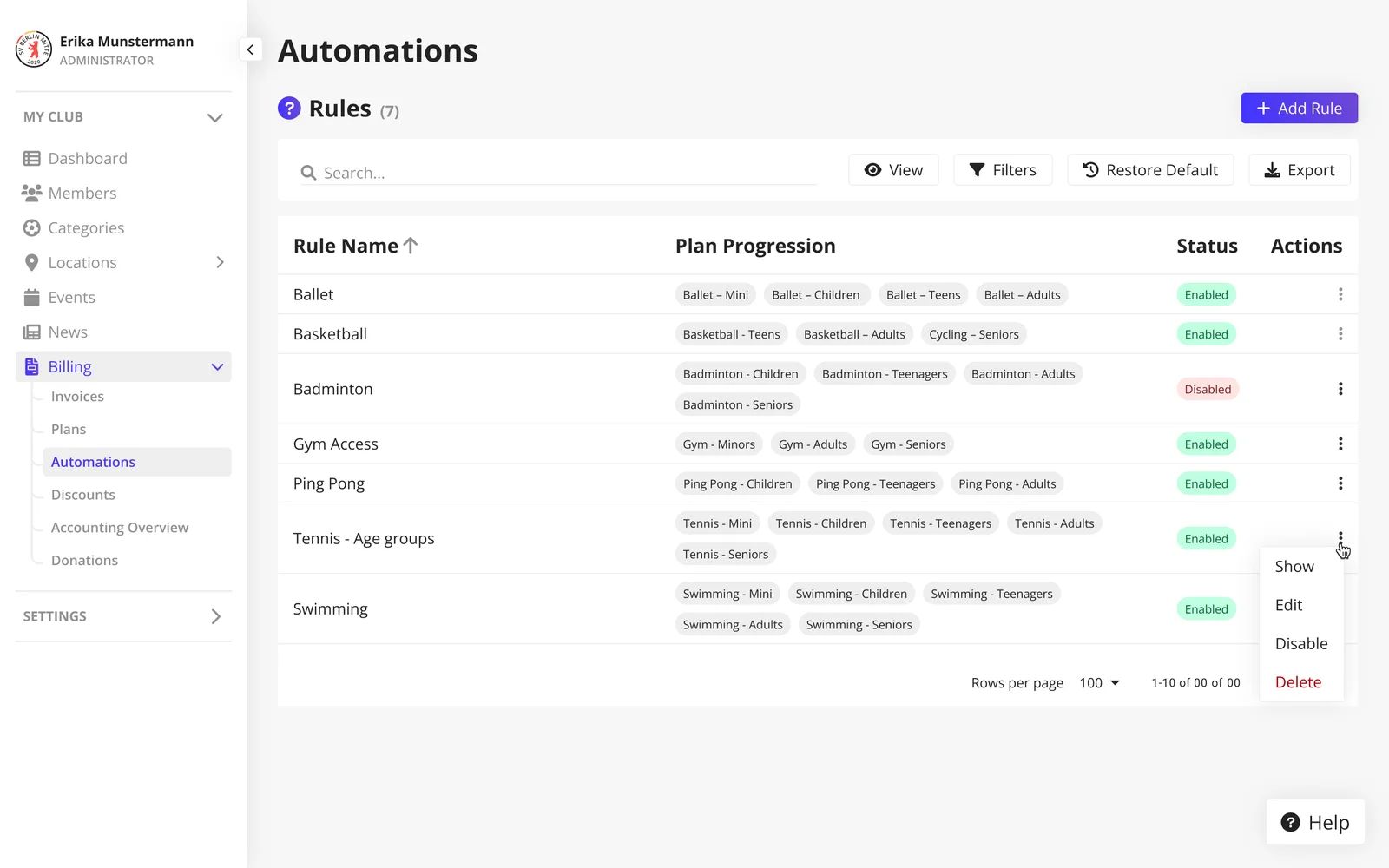
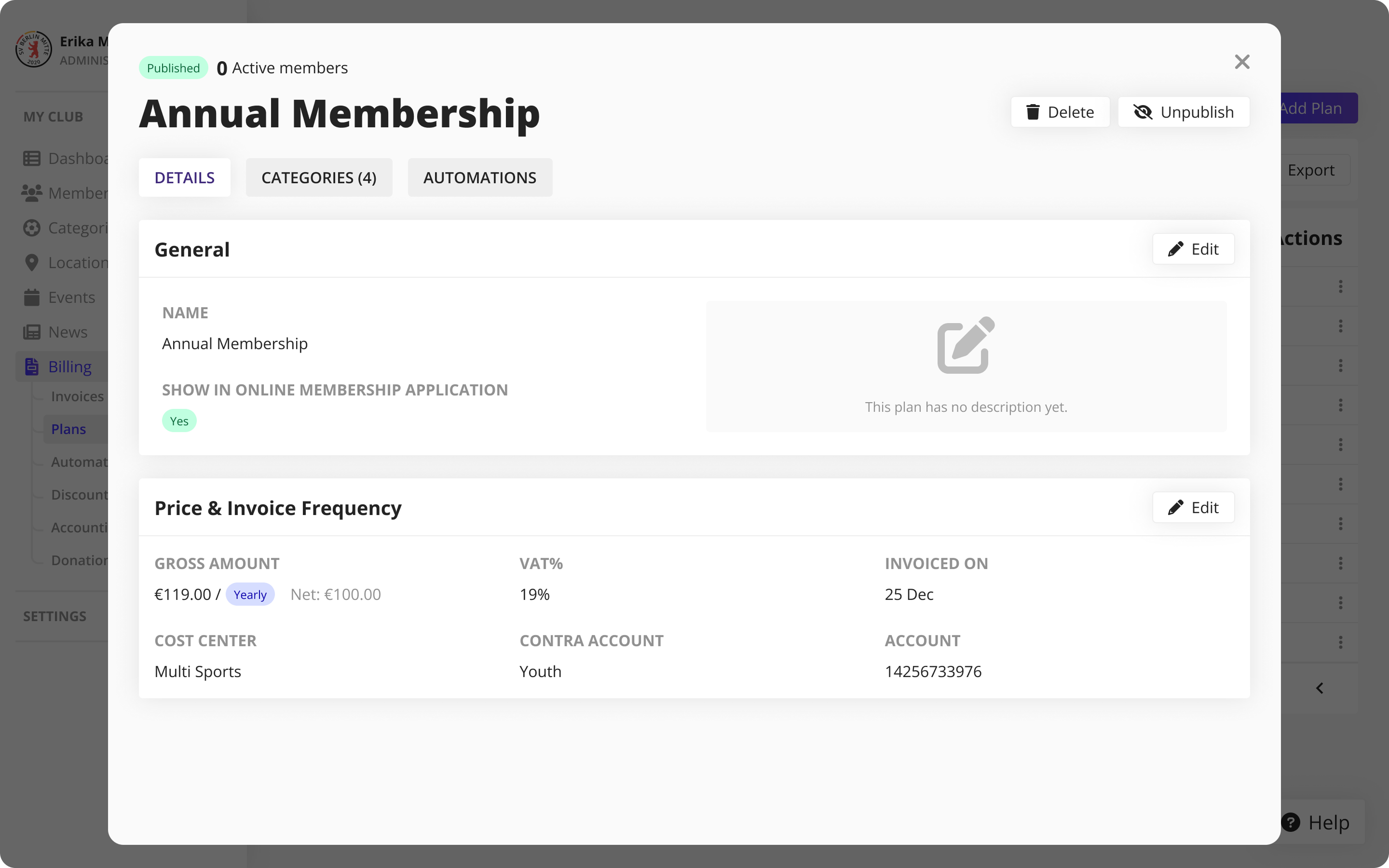
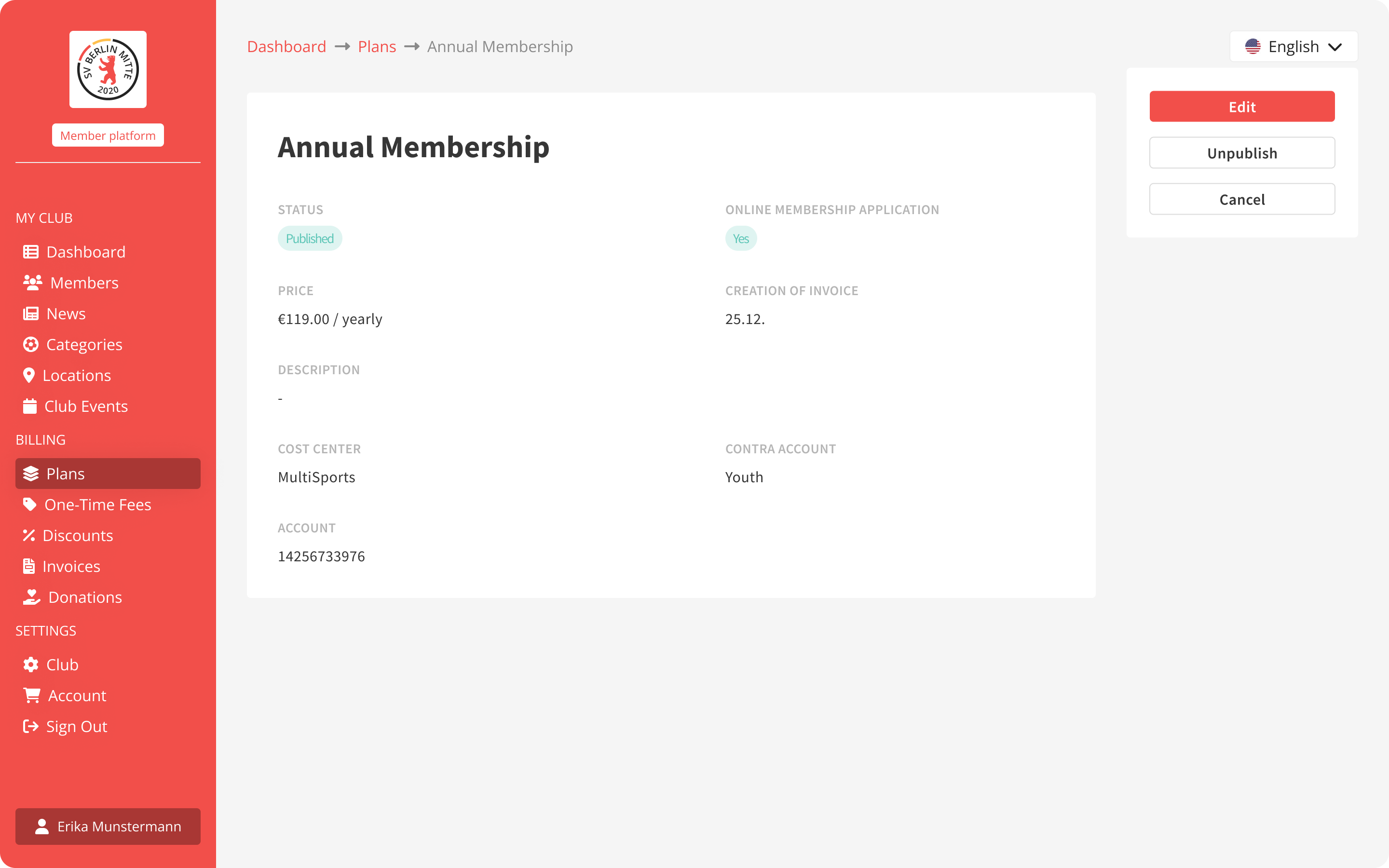
Before implementing the feature, I redesigned key parts of the subscription management area (“Plans” in the product) so the UI could support automation.
This improved clarity and usability, and prepared the interface to scale as automations were introduced.
Because automation impacts member communication, clubs needed clear control over which emails would be sent.
Designing a system that can scale
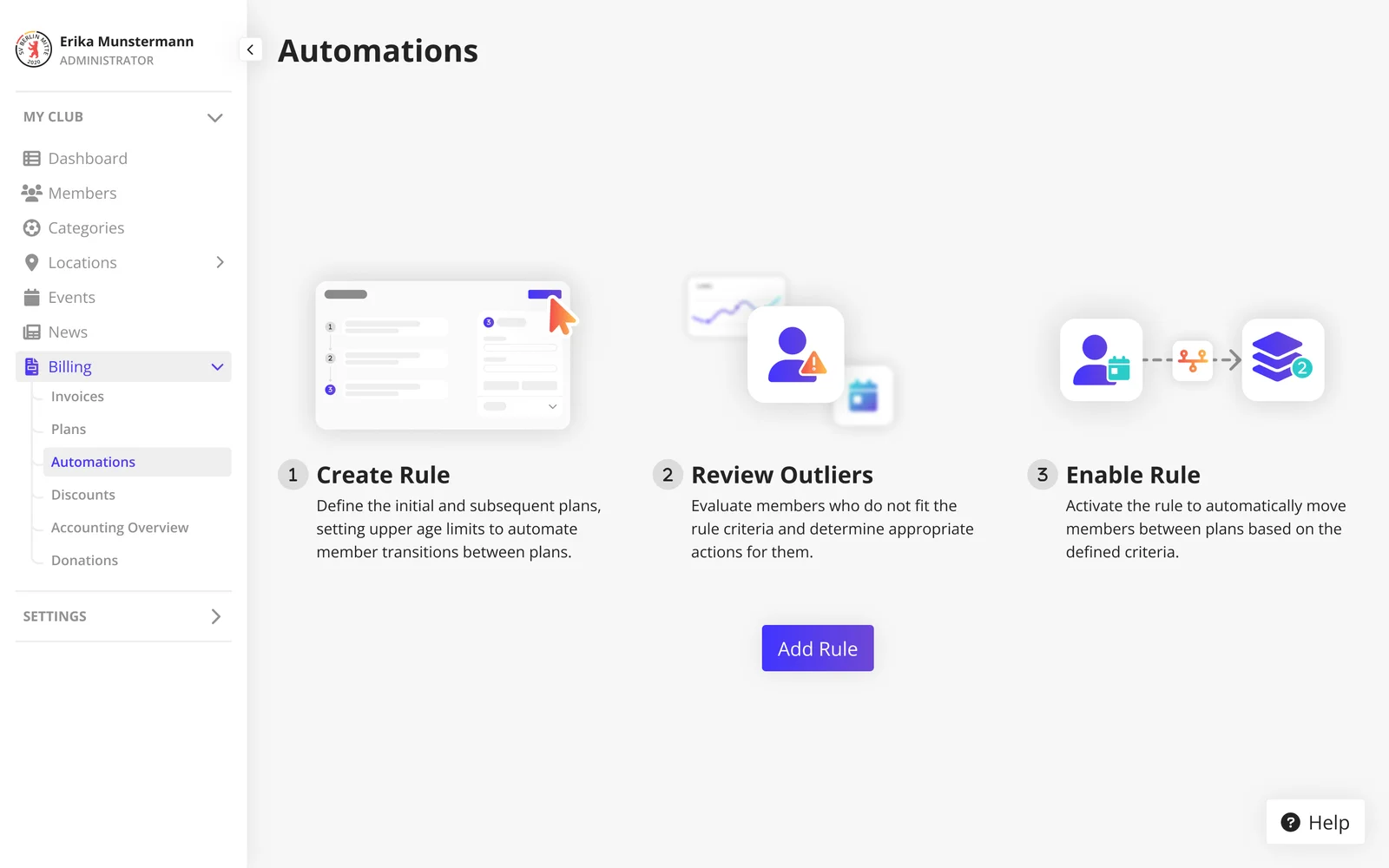
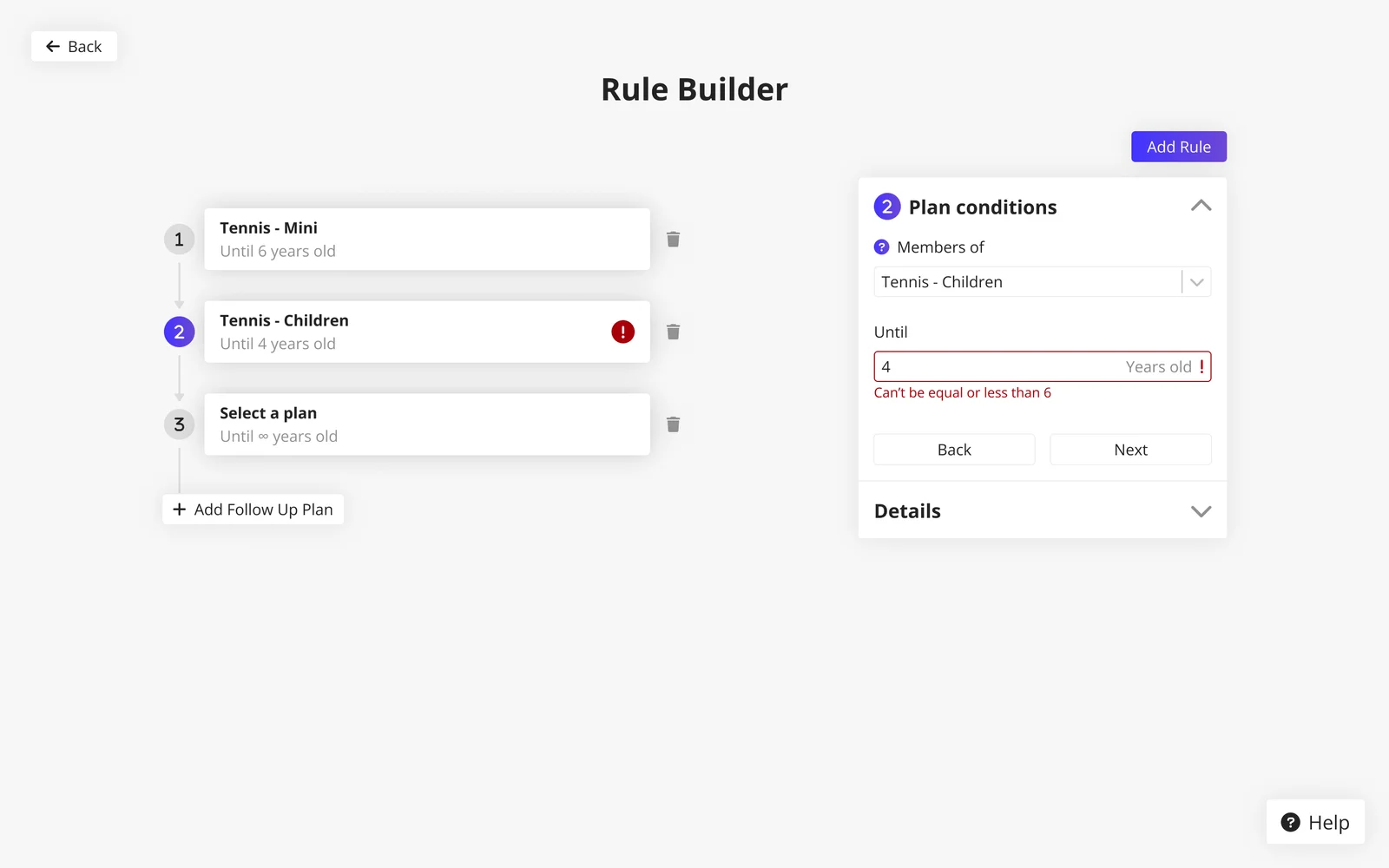
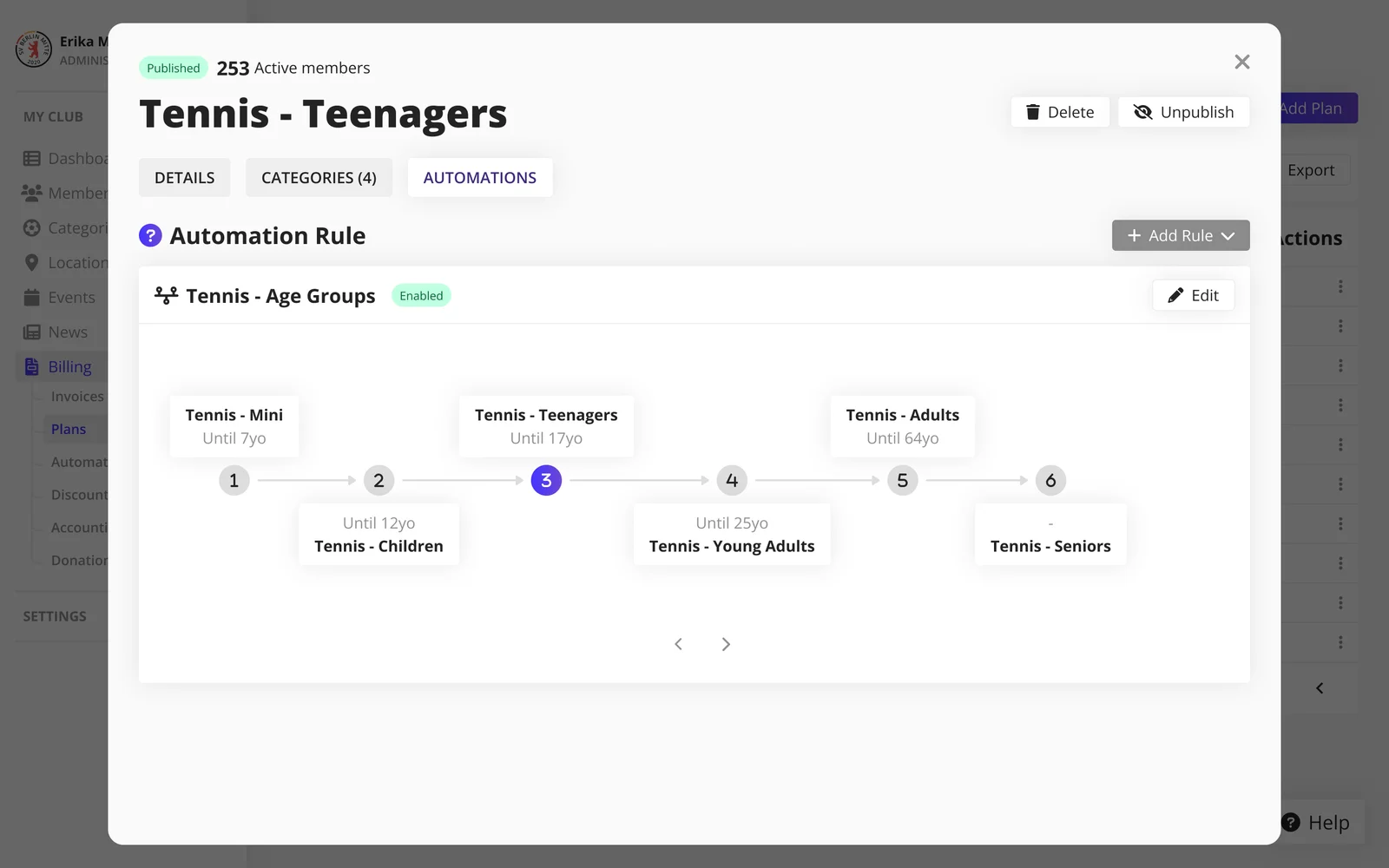
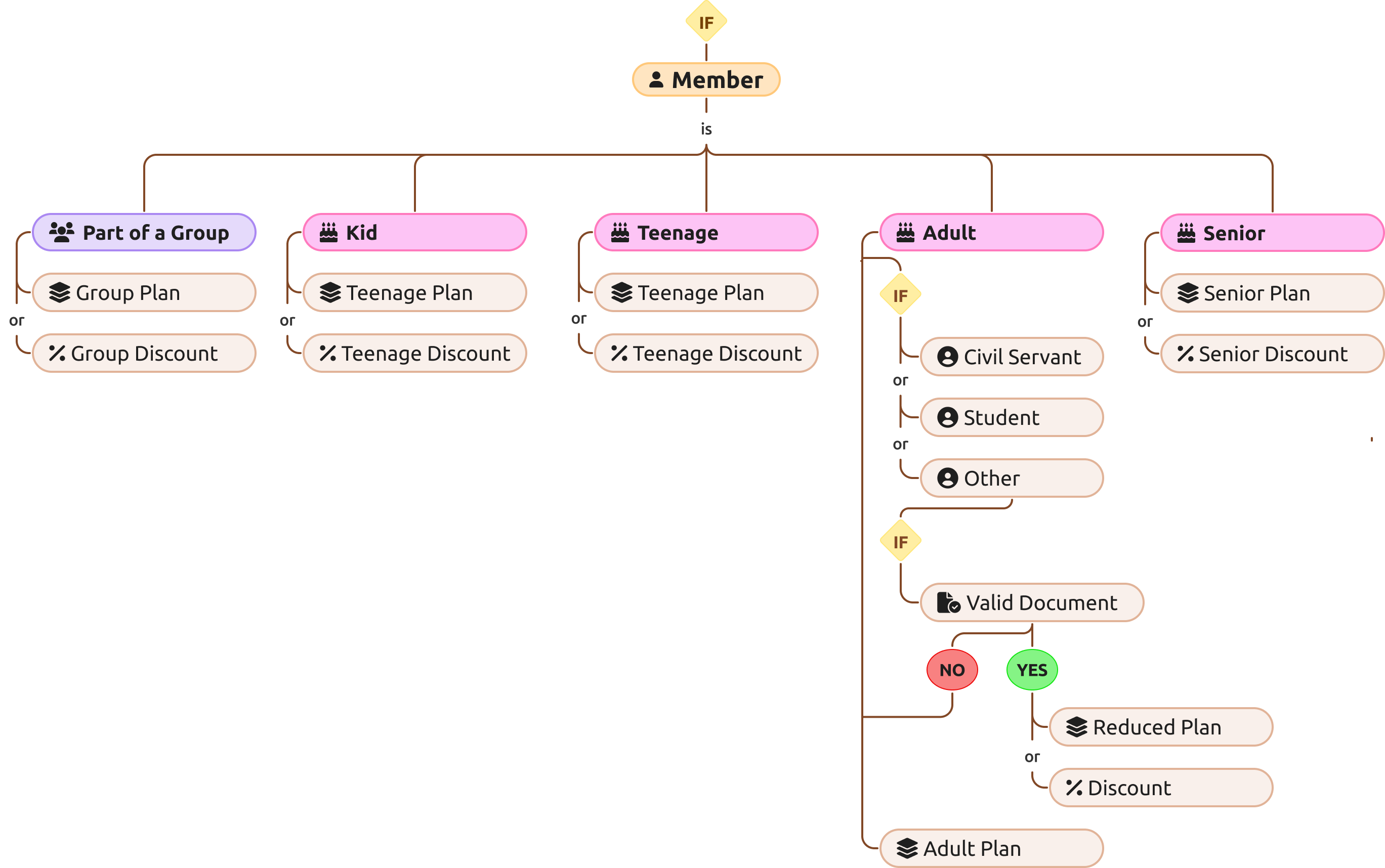
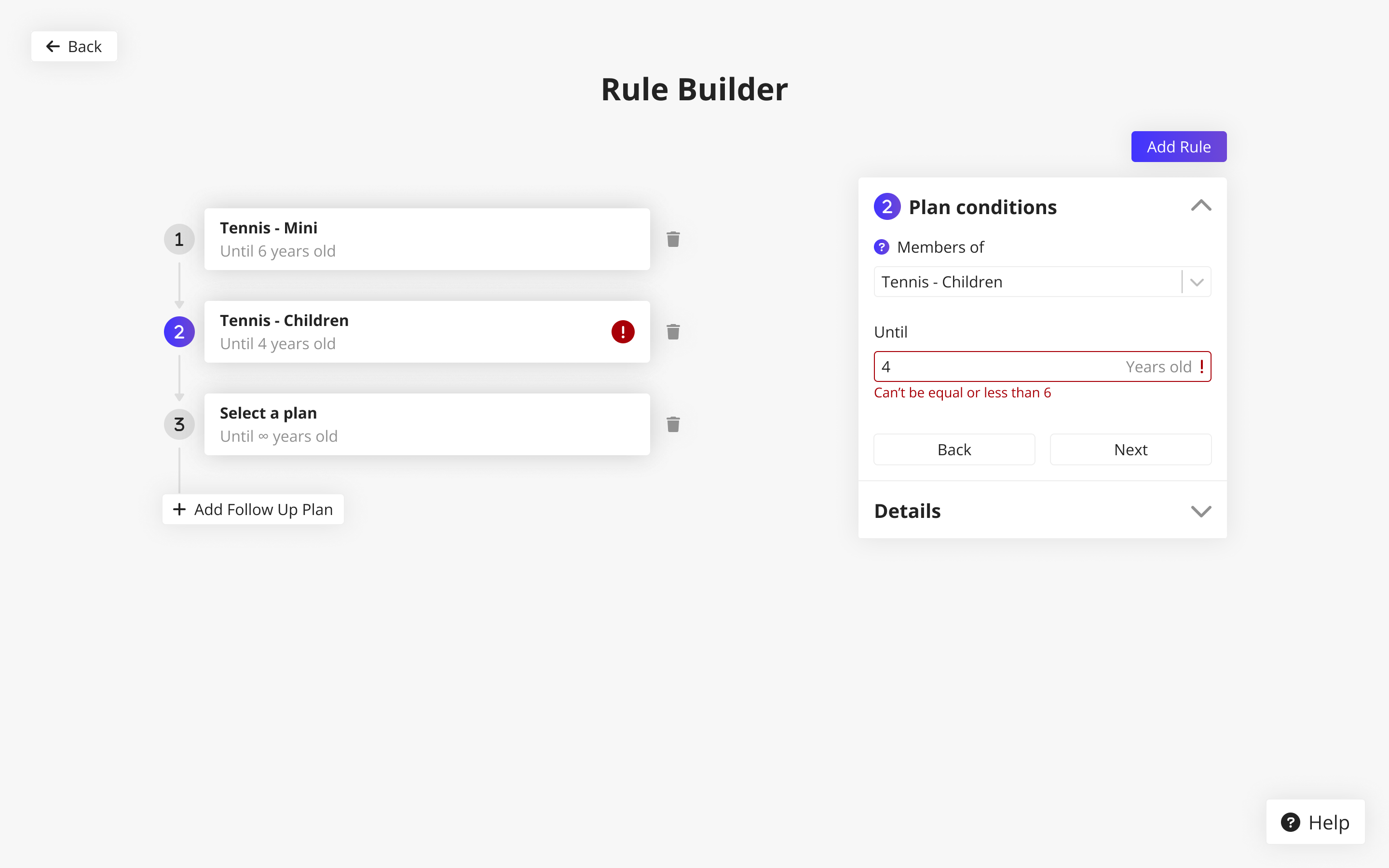
I designed and specified a rule builder to make automation safe and predictable.
In close collaboration with engineering, leadership, and key client clubs, I defined how rules should behave, how edge cases are handled, and what could realistically be automated.
The system was designed so new rule types could be added over time without reworking the core logic. For example, applying discounts after document validation.
Validation, impact and KPIs
The feature was validated through investor pitches, client demos, and direct collaboration with sales and large club accounts to define edge case handling and rule behaviour.
While still at Kurabu, key improvements were shipped, including allowing clubs to change a subscription's billing frequency before the first invoice, which already reduced support requests and developer workload. I ensured continuity through detailed documentation, recorded walkthroughs, and handover sessions with both designers and developers.
The projected impact was estimated by the sales team for investor and client pitches. Success would be tracked through:
- Ratio of subscriptions managed via automation vs bulk action vs manually
- Ratio of clubs using automation vs bulk actions only vs neither, across club sizes (target: 80% adoption for 1000+ member clubs)
- Number of subscription management support requests, and time spent on them (target: −70%)